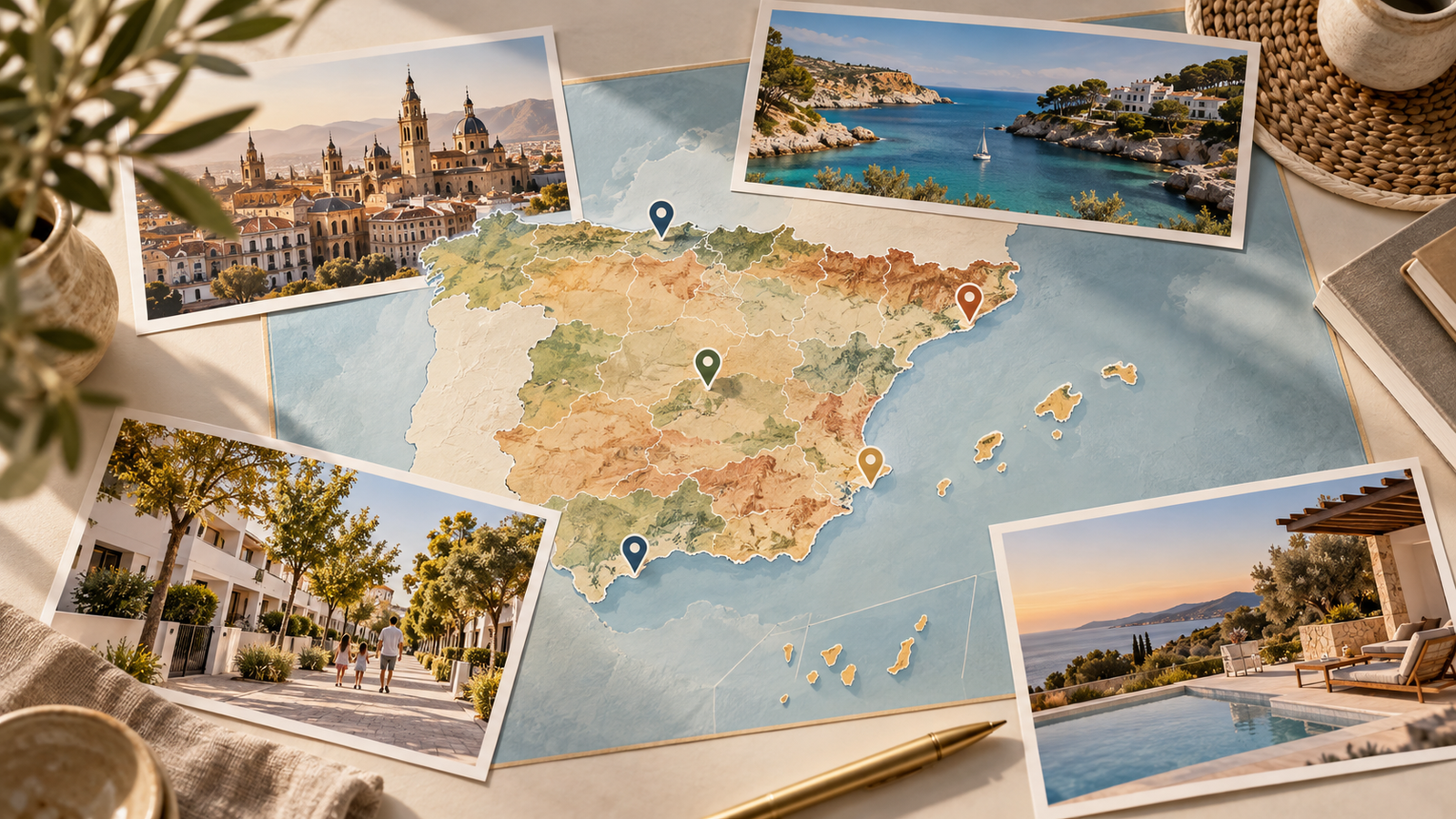
Spain is not enormous, yet climate, landscape, food, language, taxes and housing costs can change dramatically in a relatively short journey. Buyers who arrive intending to “buy in Spain” quickly discover that there are many different Spains.
Iñigo suggests comparing ten factors before you start falling in love with individual property listings.
1. PRICE: WHAT CAN YOUR BUDGET ACTUALLY BUY?
A national or provincial price average is not a quotation for the house you will buy. Compare properties of similar age, condition, interior area and location. Distinguish asking prices from completed sale prices and official appraisal statistics. Include taxes, transaction costs and recurring costs in the same comparison.
A coastal penthouse, inland detached home and city apartment may have identical headline prices yet offer completely different living costs and compromises.
2. CLIMATE IN JANUARY AS WELL AS AUGUST
Summer photographs tell you almost nothing about winter heating, humidity or day length. Check regional climate patterns and visit during a season when you will genuinely use the property. The answer may be different for a holiday owner and someone retiring permanently.
3. THE BEACHES
Do you want to walk to the beach or simply have the coast within reach for weekends? Some properties promoted as being in a seaside town sit a substantial drive from the sand. Try the route and assess noise, parking and summer crowding.
4. MOUNTAINS AND OUTDOOR LIFE
Spain offers hiking, cycling and mountain scenery as well as beaches. Decide how often you will actually use these advantages. A home close to a mountain trail is only valuable to you if that activity is part of your life.
5. FOOD AND LOCAL HABITS
Food culture varies across regions, as do opening hours, markets and social routines. Spend time in ordinary neighbourhoods, not only tourist restaurants. Your weekday habits will matter more than the restaurants on your holiday list.
6. INTERNATIONAL FLIGHTS
For buyers who plan regular trips to their home country, the key is not the distance to an airport but whether there are practical year-round routes. Check current airlines, seasonal changes, transport to the airport and the cost of travelling with luggage.
7. RAIL CONNECTIONS
High-speed rail can make a city more accessible, but the entire journey includes getting from the property to the station. Calculate the real door-to-door time, especially if you will work or visit family elsewhere in Spain.
8. TAXES AND OWNERSHIP COSTS
Purchase taxes and certain other obligations depend on the autonomous community, the property and your personal circumstances. Avoid choosing a region from a simplistic “cheapest tax” ranking. Obtain an up-to-date scenario-based estimate for the kind of home you expect to buy.
9. LANGUAGE
Spanish is used nationwide, but some communities also have co-official languages. Consider day-to-day services, schooling, administration and how you intend to integrate. A local-language environment may be an enriching part of the move rather than a barrier.
10. YOUR COMMUNITY
Some buyers want to be close to compatriots and international schools. Others prefer to live in a primarily local neighbourhood. Ask whether you will have social contact outside the peak holiday months.
SIX DESTINATIONS, SIX DIFFERENT FITS
The Costa del Sol can appeal to people seeking coastal living, international connections and a broad choice of neighbourhoods. Hillside and central addresses may have very different transport needs.
Alicante and the surrounding coast offer a wide range of communities, from busy resorts to quieter inland towns. Prices and services vary considerably even within the same municipality.
The Balearic Islands offer island living and spectacular scenery. Consider the effect of limited land, seasonality and travel to the mainland.
The Canary Islands attract buyers looking for a different climate and year-round outdoor activities. Island logistics and journey times deserve careful consideration.
Barcelona combines a major city, culture and access to the coast. Housing types, language environment and neighbourhood character change quickly across the metropolitan area.
Madrid offers a capital-city lifestyle, public services, culture and transport links, but not a beach on your doorstep. Its climate and daily rhythm suit a different kind of buyer.
There is no universal winner. Each option asks you to make a different trade-off.
THE NINE QUESTIONS TO ASK
What is my full budget? What can it buy in each neighbourhood? What is the weather like in winter? Do I want beaches, mountains or both? Do local habits suit me? Can I travel home easily all year? Will I use the rail network? How do the taxes apply to my situation? Which language and social environment would make me happiest?
Visit your shortlist in both high and low season. Then choose a property—not the other way around.
FAQ
Should I compare provinces by average price per square metre? Use consistent statistics for orientation, but compare equivalent properties and full costs before deciding.
Which region is best for foreign retirees? There is no universal answer. Healthcare access, budget, winter climate, travel and community matter more than a generic ranking.
Is a direct flight enough to choose a city? No. Check frequency, seasonality, local transport and actual door-to-door travel.
To explore Fuengirola neighbourhoods in more detail, see the linked guides below.
Further reading
Before committing to a property, review the step-by-step guide to buying in Spain as a foreigner.