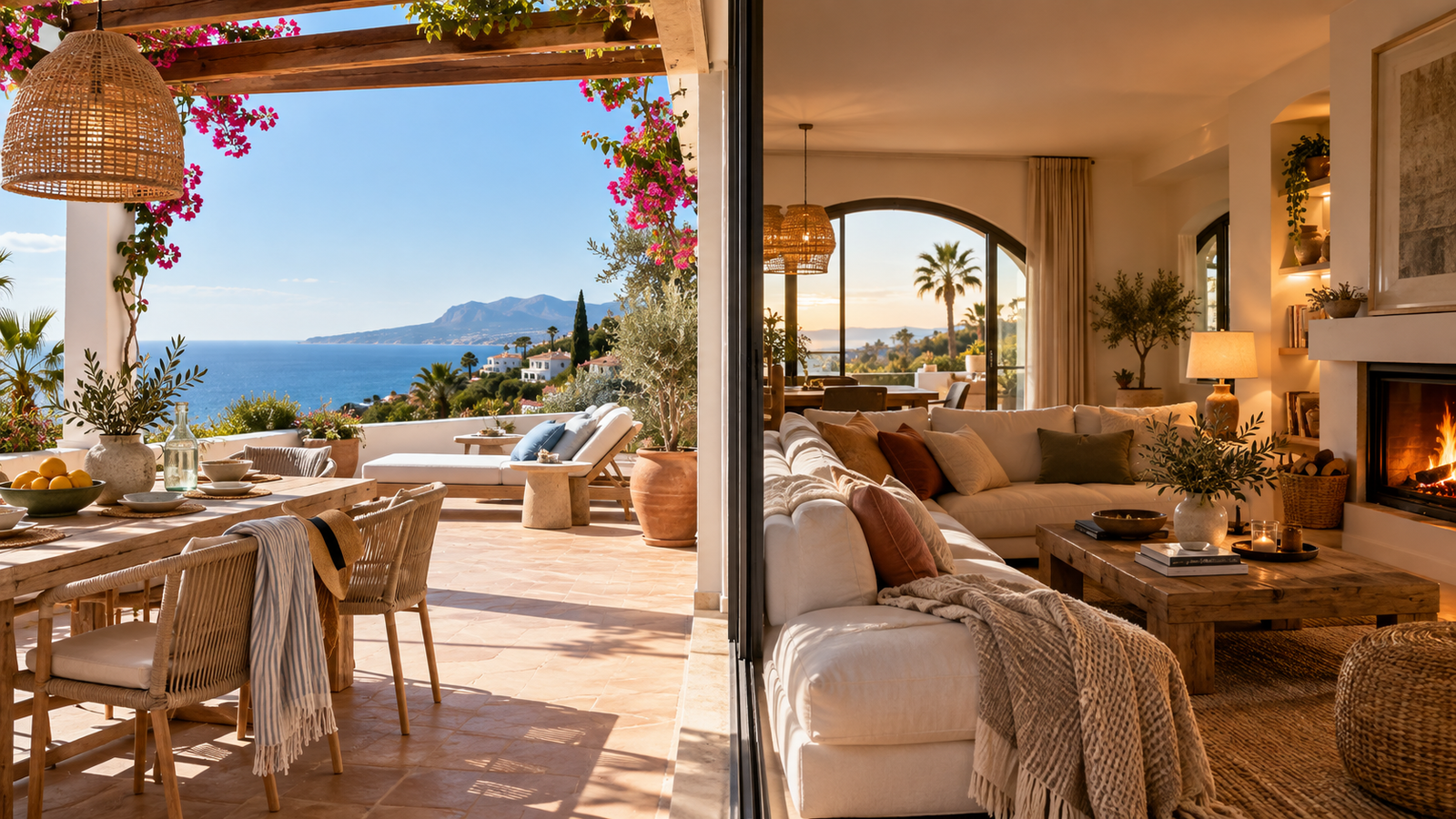
Many buyers come to the Costa del Sol expecting to spend a few weeks a year here. Then those weeks become months. Others make a permanent move into a home originally chosen for holidays. The same discovery often follows: the property was designed for a different life.
A holiday apartment and a full-time home can look identical in a listing. The differences become clear when you actually live there.
SPACE: FROM HOLIDAY ESSENTIALS TO YOUR WHOLE LIFE
For short stays you may only need a bedroom, a practical kitchen, an outdoor table and enough space for summer clothes. Living here all year means finding room for paperwork, equipment, winter clothes, luggage and the things you cannot keep in another country. Storage moves from a nice extra to an everyday need.
Visitors matter too. Children returning home, grandchildren staying in summer or friends visiting for a week can change what counts as a useful second bedroom. But buying more rooms than you need also increases your costs: decide how often those guests will really come.
WORKING FROM HOME
A laptop at the dining table is manageable for a fortnight; it is rarely comfortable for a year. Test your internet connection, mobile reception, noise levels, daylight and whether you can shut a door on your working day. Ask the provider what service can actually be installed at the property rather than assuming that the neighbourhood has good coverage.
CHILDREN AND THE DAILY ROUTINE
If children live with you, look beyond the property itself. Study space, school journeys, activities, parks and the ability to move independently all matter. A house that makes a wonderful family holiday base may create exhausting weekday journeys. School proximity does not guarantee admission: check the applicable admissions process separately.
JANUARY, NOT JUST AUGUST
The Costa del Sol has a mild reputation, but a home that is pleasant in summer can feel damp or chilly in winter. Visit during cooler weather if you can. Check glazing, ventilation, heating, insulation, orientation and energy performance. A winter afternoon tells you things a sunny viewing will not.
LOCATION: LIFE ON FOOT OR QUIET ABOVE TOWN
Central locations can offer shops, healthcare, cafés and public transport within walking distance. They may also mean more traffic, summer activity and smaller homes for the same budget.
Hillside residential areas may offer greater privacy, views and space, but your car can become essential. Never judge the journey by a map alone: try it at the times you will really travel, including the return journey and parking.
THE COST OF AN EMPTY HOME
A property that stands empty for months still needs attention. Who will check for leaks, ventilate rooms, collect mail and respond to a repair? Consider management arrangements and costs. A permanently occupied home is easier to monitor but its fittings, appliances and finishes receive heavier use. Durability may matter more than a luxury finish.
NEIGHBOURS AND SHORT-STAY LETS
A residential building with long-term neighbours can feel very different from one with frequent visitor turnover. Neither environment is automatically right or wrong. Ask how the building is used, what the owners’ association rules say and whether noise has been an issue.
Since April 2025, certain new tourist-accommodation activities in apartment buildings require express approval from the owners’ association under Spain’s Horizontal Property Law; transitional provisions and other tourism requirements may apply. Never assume that buying a home automatically gives you the right to use it for holiday lets. Check the specific property with qualified advisers.
COMMUNAL FACILITIES: WILL YOU ACTUALLY USE THEM?
A pool, gym, co-working area and concierge service look attractive. But their ongoing cost is shared through community fees whether you use them or not. Large developments can spread costs across more owners and sometimes offer better security during long absences. Smaller communities may offer quieter shared spaces, yet an unexpected repair can be more expensive per owner.
Neither is universally better. Match the services to your real use and review accounts, approved works and outstanding charges before buying.
A PRACTICAL TEST BEFORE VIEWING
Ask yourself: How many months will I spend here now and in five years? Will I work remotely? What will I store? How warm will the home be in January? What can I do without a car? Who will check the home while I am away? How much will unused shared facilities cost? Who are my neighbours and what are the letting rules?
The right choice is the property that supports your actual routine, not the one with the most compelling listing photographs.
FAQ
What matters most in a holiday home? Predictable running costs, security during absences, ease of access and a realistic maintenance plan.
What if I might retire here later? Choose with winter comfort, accessibility, space and daily services in mind from the outset.
Can any apartment become a holiday rental? No. Rules can involve the owners’ association, regional tourism requirements and local restrictions. Check before relying on rental income.
For related practical detail, consult the linked guides below.
Further reading
For a broader purchase decision, see the practical guide to renting or buying on the Costa del Sol.